
Bingham County Criminal Court Cases
Bingham County criminal court cases are divided by function, not by separate city court systems. The Magistrate Division tries misdemeanors and handles arrest and search warrants, bail, initial appearances, and preliminary examinations in felony matters. A felony that survives the preliminary stage moves to the Idaho District Court for trial. Both operate at 501 N. Maple Street in Blackfoot, which keeps the local court route unusually compact.
The county's Magistrate Court source identifies the misdemeanor and warrant route.
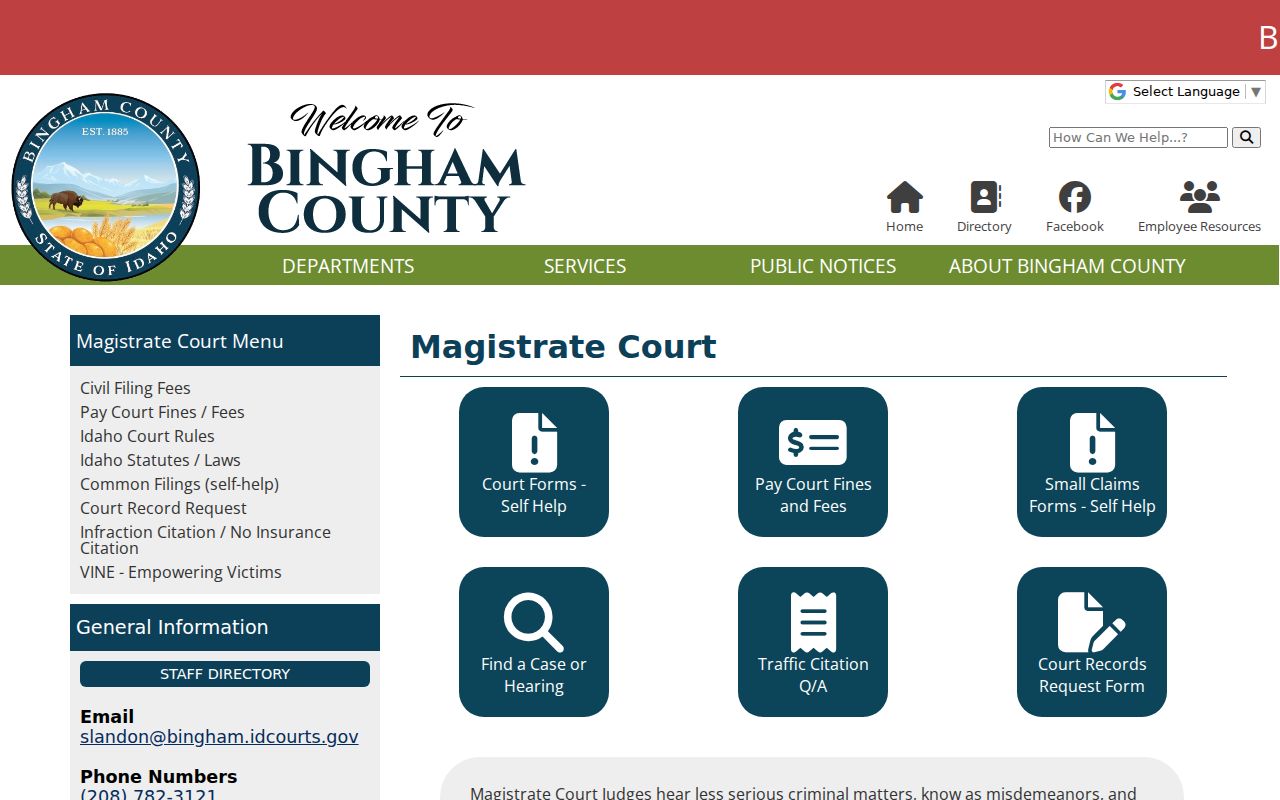
That division also creates the first court events in felony proceedings.
The court records office is the custodian for the filed case. Its file differs from a sheriff report or jail booking entry. The docket tracks what prosecutors filed and what the judge did, including a changed charge, plea, dismissal, judgment, and sentence. Blackfoot, Shelley, and Aberdeen do not maintain separate municipal criminal-court databases. Their cases use this shared Bingham County judicial route. Court records staff can be reached at 208-782-3130 or lgardner@bingham.idcourts.gov.
Bingham Criminal Court Routing
A common source of confusion is seeing one matter in both divisions. That does not mean two trials exist. Magistrate judges conduct the first appearance, set bond, and decide whether a felony has enough support to proceed. District Court then holds the felony trial and enters the final judgment. A misdemeanor generally remains with the Magistrate Division.
The official District Court page confirms the felony court channel.
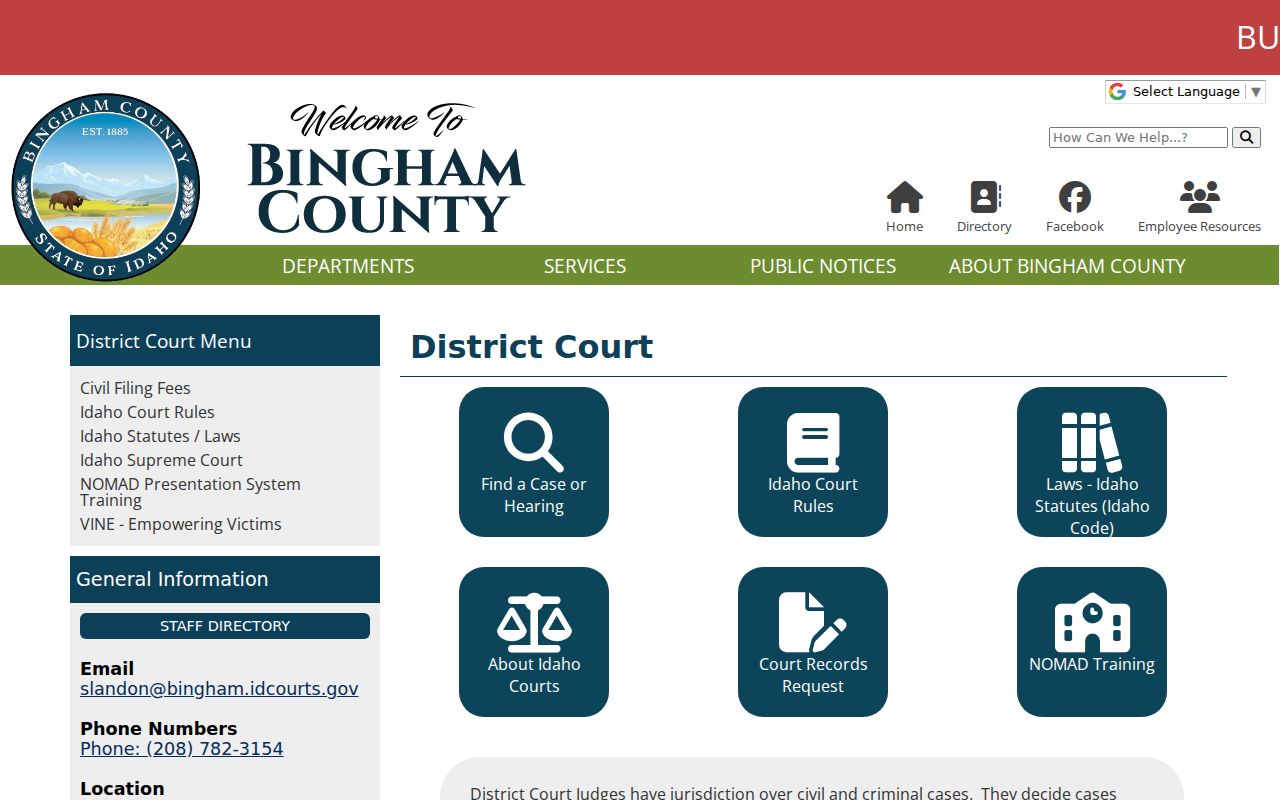
Its records should be read with the earlier Magistrate docket when a felony was bound over.
District Court
Suite 310, 501 N. Maple Street
Blackfoot, ID 83221
208-782-3154
Generally 8 a.m.–5 p.m., with a lunch closure
Magistrate Court
Suite 402, 501 N. Maple Street
Blackfoot, ID 83221
208-782-3121
8:30 a.m.–4:30 p.m., open through lunch
Use the division and case number shown on the docket when asking for a copy. The same defendant name may occur in unrelated matters, while an arresting-agency number may not match the court number.
Searching Bingham County Case Records
The Idaho iCourt Portal is the main remote route for filed Bingham County case records. The county also links to its Bingham Odyssey portal. Public access can show case events and hearing information, though document visibility varies. The interactive Smart Search controls were not fully available during research, so do not assume an unverified filter, export option, or result limit.
- Open iCourt and choose the public case-search route.
- Search with the court case number when known. Otherwise use the party name and confirm identifiers carefully.
- Confirm Bingham County and the correct court division before treating a result as the sought case.
- Read the docket in date order. Distinguish a filed allegation from a later disposition.
- Request the actual document or a certified copy from court records when the docket summary is not enough.
| Field Label | Type | Required | Notes |
|---|---|---|---|
| Last name | Text | Search-dependent | Use exact spelling and check similar names. |
| First name | Text | No | Narrows a broad surname search. |
| Case number | Text | No | Best link to a particular court file. |
| County | Filter | No | Confirm Bingham County in the result. |
| Hearing search | Portal route | No | Useful for scheduled events; verify changes with the court. |
Bingham Court Copies and Fees
When the portal supplies only a docket line, use the county's Court Record Request form. The request asks for enough detail to identify the case and document. Court copies cost $1 per page, plus $1 for each certified document. A request may be submitted by email, mail, fax, or in person. Payment must be made before records are released.
| Item | Charge | Key condition |
|---|---|---|
| Ordinary court copy | $1 per page | Payment precedes release |
| Certification | $1 per document | Added to copy cost |
| Response timing | No charge stated | Three working days, or written notice of up to ten |
Send court requests to the court records channel, not the sheriff's records email. The sheriff keeps incident and arrest material; the clerk keeps pleadings, orders, and judgments.
Inside a Bingham County Case File
A Bingham County criminal case file records the court's work. Start with the charging document to learn what prosecutors alleged, then read forward to find changes. A complaint, information, or indictment is not a conviction. The judgment and disposition establish the result, while the sentence records the court-ordered consequence. Docket entries are an index and may be much shorter than the underlying order.
| Case Number & Court | Identifies the judicial file and division; it may differ from the agency case number. |
|---|---|
| Charging Document | States the formal accusation filed by the prosecutor. |
| Docket Entries | Chronological index of filings, hearings, rulings, and status changes. |
| Hearing Dates | Shows scheduled and completed court events, subject to later change. |
| Disposition & Judgment | Records dismissal, plea, verdict, acquittal, or other final outcome. |
| Sentence & Conditions | May state custody, probation, financial terms, or court conditions. |
Reading Bingham Criminal Dockets
Read a docket as a timeline, not a one-line label. “Arraignment” is the hearing where a defendant receives the charge and enters a plea. A “disposition” is the court's outcome for a charge. A dismissal ends that charge but does not erase the historical docket unless a separate access remedy applies. A withheld judgment or set-aside also should not be described as though the entire record never existed.
- Complaint
- The first written criminal charge commonly filed in Magistrate Court.
- Information
- A prosecutor's formal felony charging document after the preliminary stage.
- Disposition
- The result of a charge, such as dismissal, guilty plea, verdict, or acquittal.
- Judgment
- The court's formal decision and, when applicable, sentence.
BCI's Personal Identity Summary may compress the result into a disposition or sentence segment. The court file is the better source for the actual order and the sequence that produced it.
How a Bingham Criminal Case Moves
The judicial record begins when a charge is filed, even though an arrest or citation may have occurred first. Magistrate Court handles arraignment and pretrial work in misdemeanors. In felonies, it handles the initial appearance and preliminary examination before a bound-over case reaches District Court. Motions, negotiated pleas, trial rulings, and sentencing each add docket events and sometimes separate documents.
Case flow: Charges Filed › Arraignment › Pretrial › Plea or Trial › Disposition › Sentencing
There is no single local timetable for every case. Hearing dates can move, and a portal entry may lag a recent courtroom event. Confirm an imminent appearance directly with the clerk.
Bingham County Treatment Court Records
Bingham County publishes separate felony, misdemeanor, and mental-health treatment court programs. These are structured supervision programs, not separate secret courts. Eligibility review follows a guilty plea or verdict, a court may order a clinical assessment, and admission is not automatic. The filed case still belongs to the same county court system.
The program can affect what appears after disposition, including review hearings and supervision events. Sensitive clinical information may be protected even when the case docket remains public. Ask the clerk for the public case record rather than assuming every program document is open.
The Idaho State Public Defender now manages indigent defense statewide, including District 7. That office structure does not change who holds the court file.
The state public-defense directory shows the current District 7 structure.
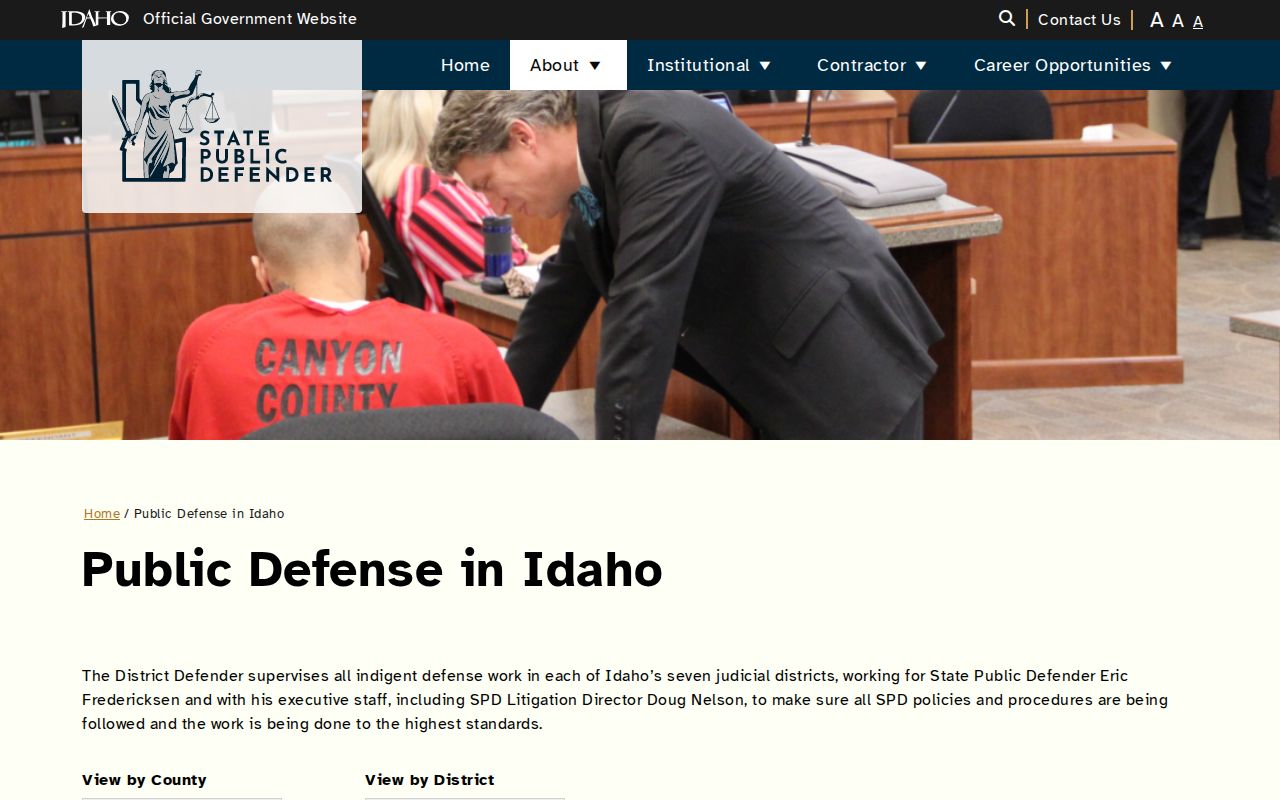
Defense administration and court-record custody remain separate functions.
Case Record Access and Restrictions
Idaho Court Administrative Rule 32 governs judicial-record access. Public status does not mean every field or document appears online. Juvenile cases, sealed records, victim information, personal identifiers, and other protected material can be withheld or redacted. A missing search result can therefore reflect restricted access, spelling, filing timing, or an older record that requires clerk help.
The Idaho Public Records Act applies to executive and local government records, but Rule 32 is the main authority for court files. Use the court request form for a judicial document. Use records@binghamid.gov or the sheriff records office for an incident report. This split avoids delays and protects the difference between an allegation, a booking event, and a court outcome.
For the event that preceded a filing, consult the county arrest lookup channels. Always return to the criminal case file for the filed charge and final court result.
Courthouse visitors enter through the public front doors and pass belongings through X-ray while walking through a metal detector. County jury instructions advise removing metal from pockets, limiting bags, avoiding metal-plated footwear, and leaving weapons, including pocket knives, elsewhere. Public parking is available, with overflow space across the street near Patriot Field Veterans Memorial. These practical rules matter when a digital docket is insufficient and the clerk's counter or a public-access terminal is needed. Contact the clerk before travel if an accommodation, interpreter, archived file, or particular document format is required. The published county material invites accommodation arrangements but does not establish one universal procedure for every court service.
Bingham Courthouse File Access
Call court records at 208-782-3130 before seeking an older or restricted file in person. Staff can confirm the correct division, request method, and whether the public portion is available through iCourt or requires a copy order.